Revisiting the Liminality of Airports through the Lens of Airport Food
I am once again confined to the premises of an airport for an extended period of time with nothing but a laptop and a change of clothes, so it’s time to explore a space I once claimed to love: airports, the most liminal of spaces we can regularly encounter.
This time around, we’re going to take a bent that many people have probably griped about in their days traveling through airports, the food. Yes, the food. When one thinks of a liminal space, one thinks of the physical, traversable places designed for human transportation between thresholds, but we’ll be tapping into the second definition for our exploration of food, that being something that occupies a position at or on both sides of a boundary or threshold, as put forth by Oxford languages.
Cause there’s one thing that airport food is not and that is anywhere close to where it stands outside of the confines of an airport.
A Look into Airport Restaurants
As I booked an evening flight as to preserve my precious accrued PTO, I naturally have worried about this airport experience for the entire length of my day. If you’ve ever read one of those memes concerning when someone has a 3:00 pm appointment so they can’t get anything done in their day, I am one of those people who find such notions relatable. It may just be the specific flavor of anxiety that I possess, but I cannot relax until I have gone over most or all of the details of my plans at least twice.
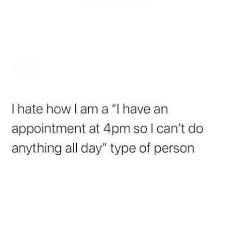
An example of the meme.
This lead me to look up the restaurants located at my local airport, Austin-Bergstrom International Airport, a place I have spent many hours in and am very familiar with - however, this particular time I am flying Southwest instead of American, and that would mean spending time on the opposite side of the airport than I am accustomed to.
Hence, the looking up of restaurants and looking at menus and planning out my evening spent waiting for an 8:20 flight that boards at 7:50 with designs to arrive two hours before the boarding time because I received a text at 4:18 suggesting I do so.
One of the results of the search ABIA Airport Restaurants brought me to a reddit thread of the Austin subreddit asking for recommendations for someone who has to eat at the airport and buried underneath the many snarky replies suggestion that they do not do that was a nugget of knowledge that I had never considered before. One such user, who will go unnamed, put forth the potential factoid that airport restaurants have no connection to their parent restaurants and that the name and menu are licensed out to a contractor company for use in the airport. The company in question, it turns out, is called a concessions contractor company and is a third party entity willing to submit to all sorts of regulations involved with operating out of an airport that a normal restaurant doesn’t want to deal with.
Here’s a link to a page that the city of Austin has created to explain the intricacies of such a relationship that allows us to enjoy subpar food at opulent prices, aka, the concept this article is all about, basically. Why don’t you read over it while I take another sip of my $14 local Austin beer. Don’t want to read it? Fine, I’ll summarize a few points here - I just wanted a reason to mention the price of the beer I’m drinking and that it’s local to Austin.
Basically, all retail and food shops found in airports are run by third party concessions contract companies who license the name, products, and menus of certain establishments to ensure there are opportunities to shop and eat in airports. The contracts go as far as the name and the menu offerings, but do not touch on certain aspects like the cooking of the food, sourcing of ingredients, or even quality of service. So while the restaurant you order a burger from might have the name Burger King, it’s technically not a Burger King, just a restaurant that has licensed the name and products of a Burger King.
In the case of Austin, there are not many chain offerings found in the concourse as ABIA is one of the first local-first airports, meaning 85% of their retail and food offerings are focused on local Austin establishments. According to Contract Management Specialist Cassandra Thomas in that link I posted earlier, “Our passengers love to come into the airport and see the same iconic brands they have seen on the street side. They get to be immersed in the Austin vibe by enjoying the quality of the food along with live music playing.”
Which, I can agree with to a point - the Austin airport does feel very Austin, in a corporate, washed down way that still makes it stand out from other airports. There were actually two live bands I walked past to get to this quiet nook to write this post, which is actually another stage that’s not being used right now.
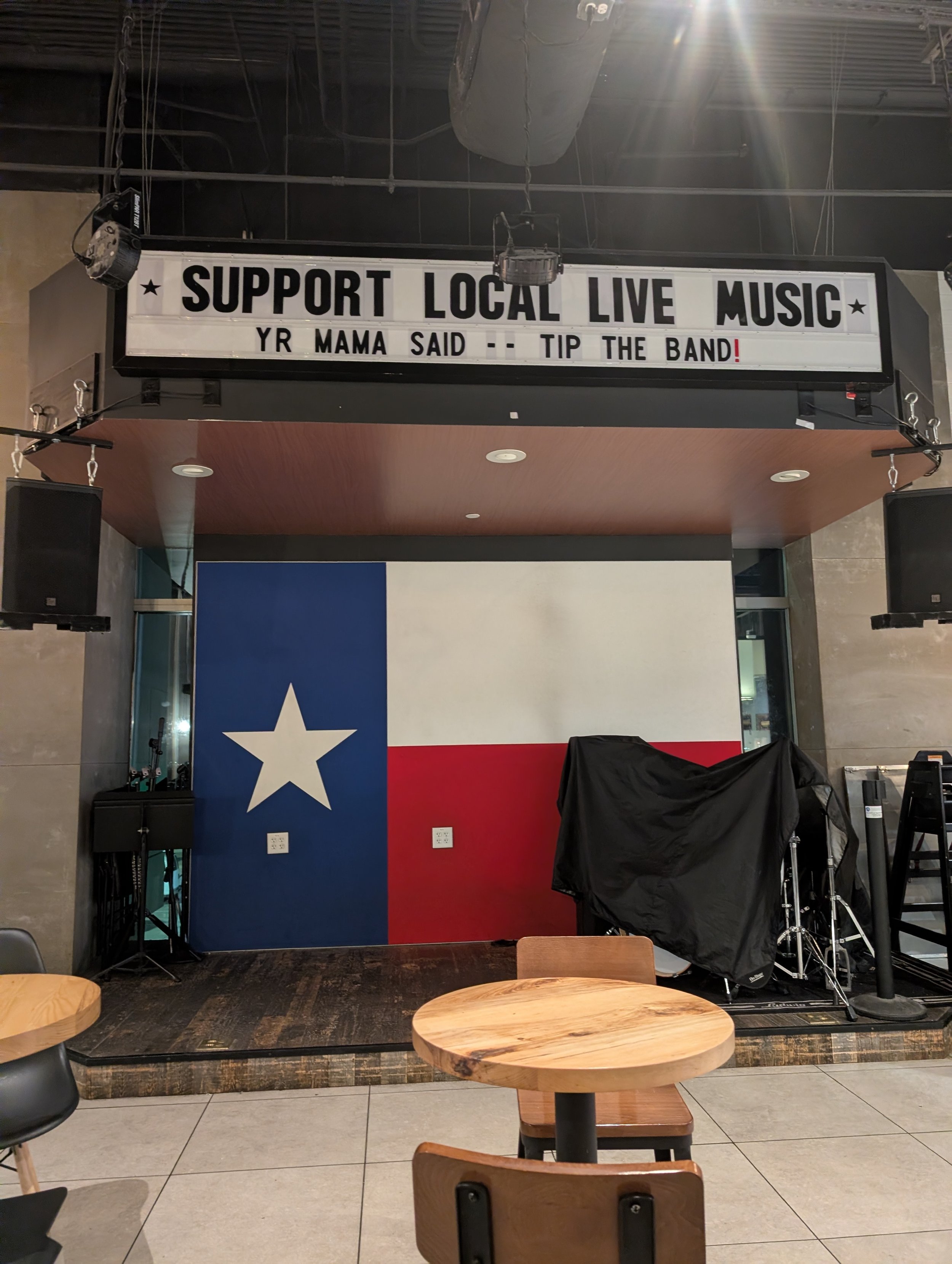
I have a whole album of liminal spaces I’ve encountered.
But this whole mess with contracts and third party companies, that’s where the meat of the matter is for our liminal exploration is, if you can excuse the weak food-based pun.
Fried Imitation Reality
You have no idea, but I just moved between sections from my quiet secluded corner in front of that unused stage to the gate for my flight. Why did I do this? For one, I couldn’t hear any of the concourse-wide announcements and swore I kept hearing my last name every time someone said checkpoint. And for two, so that I could be positioned to look at a particular eating establishment that just so happens to be across from my gate tonight.
Let me introduce you to Hut’s Hamburgers, a place I tried to eat at but had to pass up due to there being no express or to-go options (and I refuse to get tied down to a sit-down restaurant in an airport do my immense fear of missing a flight (and wasting the purchase cost of an airline ticket)).
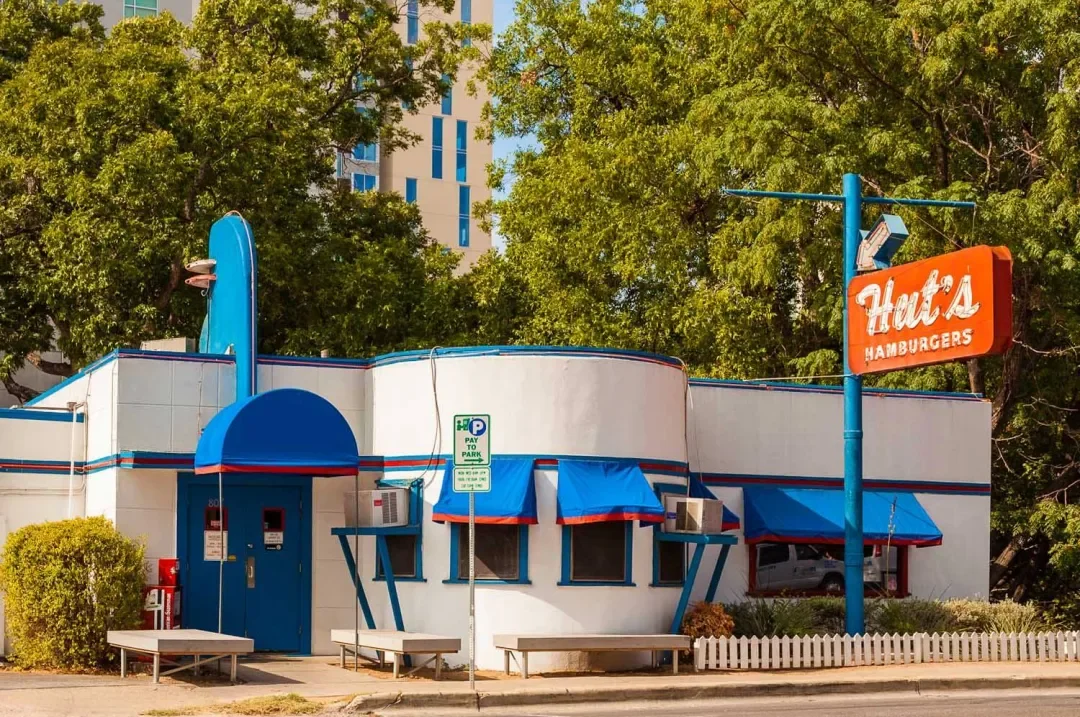
Pictured: A Past We Cannot Reclaim.
For those of you who do not know, Hut’s Hamburgers is a local Austin mainstay for greasy, delicious, hamburgers at a fair price. Or, well, I should say Hut’s Hamburgers was a local Austin mainstay, since the only physical location outside of the airport closed in October of 2019.
Established in 1939 on South Congress, one of the main thoroughfares of Downtown Austin, before moving 30 years later to its last known location on 6th Street, the late night party spot of Austin, Hut’s Hamburgers was a favorite spot for anyone seeking one of the best burgers of the city. The reason for closing was found to not be a landlord dispute for increasing rent, as became increasingly more common in the years subsequent its closing, but rather the owners wanting to move in a different direction, as Nadia Chaudhury writes in the linked article.
But, sitting across from me in this very concourse, is a ghost, a memory of that erstwhile eating establishment. Hut’s Hamburgers lives on through the zombie that wears its skin on the other side of TSA security and will remain in this location until 2029 at the earliest, as all concession contracts for ABIA run 10 years.
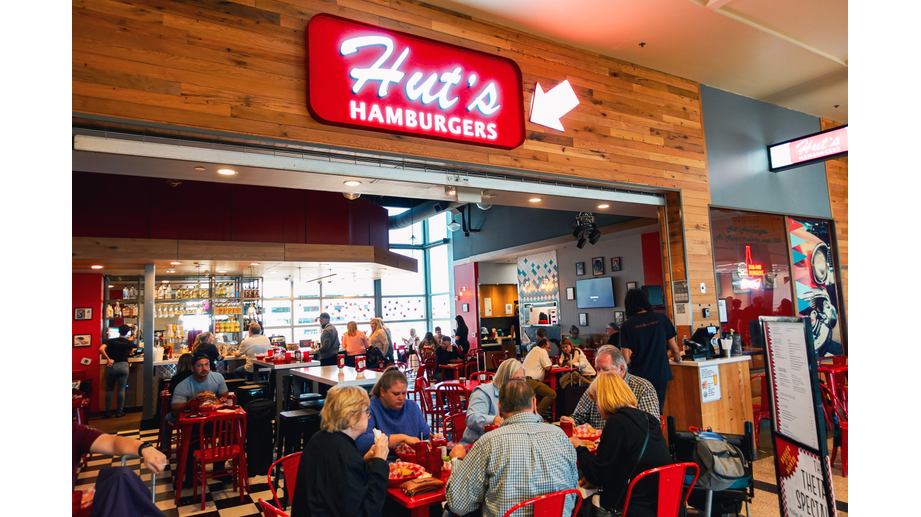
Pictured: Poorly Cropped Necromancy.
Yeah, the same year that the main location closed down was also the same year that saw the Hut’s Hamburgers in the airport open up, an almost non-equivalent exchange as there is nothing in the kitchen resembling the original designs and vision for the restaurant outside of the literal types of ingredients (ground beef, etc.).
Enter liminality. Enter a state of being between two thresholds. The Hut’s Hamburgers that I’m writing about exists in a state of in-between - it is neither the original nor is it its own thing, cursed to live in the echo of the licensing of a dead restaurant. The result is something hollow, something that has become all but endemic for the city of Austin at large - corporatization of something unique for the sake of celebrating what makes Austin special while at the same time losing that special quality due to over-corporatization.
In a way, it’s a bit ironic. While Hut’s Hamburgers did not close for reasons similar to that of so many unique Austin eateries closing down, that is absurd rent increases as a disguise for selling the property off to make room for more condos, it is being kept alive (somewhat) through a corporate policy that mandates concessions contracts be good for 10 years. In other words, Hut’s Hamburgers Airport Edition has rent control while so many other restaurants have closed facing rent increases aimed at forcing the owners to close so the property can be sold.
I’m not saying that rent controlling restaurant leases is the move, but I’m also not not saying that, so.
The point is, through a contract agreement, the name Hut’s Hamburgers limps along, even if it’s just in the form of an airport restaurant. Now I can’t speak to the quality of the food there, but if the grilled chicken sandwich I just ate from a certain Noble Sandwiches is anything to go by, I can’t imagine the food is all that great. And on that note:
Attack of the Dead Restaurants
Another restaurant that I have frequented many times at the Austin-Bergstrom International Airport is a chicken place by the name of Flyrite. My spouse and I even turned it into somewhat of an in-joke saying you didn’t Fly Right if you didn’t get Flyrite (and if anyone working for whoever is running that restaurant wants to buy that off me, I can be reached at hshepardwords@gmail.com). Flyrite is a curious case because prior to my realization that most of their physical locations had closed, I only had the opportunity to eat at this airport version.
The airport version, which is still in operation to this day, is terrible.
The restaurant version of Flyrite (as depicted on this architect website) is closed.
However, what is available to me are countless reviews of the restaurant insisting that the quality had continued to dip and dip; that it is mercy that the place closed down.
And here I am with a memory of really liking the food, but no outlet with which to verify that the food was as good as I’m remembering. If I want the La Croix version, I can try the airport Flyrite, but run the risk of having an expensive, terrible time while being trapped in the confines of an airport and I’d much rather have an expensive, mediocre time instead.
This isn’t what I mean by attack, by the way, not by a longshot. The real attack is found in the repeated adjective in that last paragraph - the expense of these mediocre to terrible facsimiles of actual, honest-go-good great places (objectable) to eat.
Here, have a picture of the actual meal I ate across from that abandoned stage.
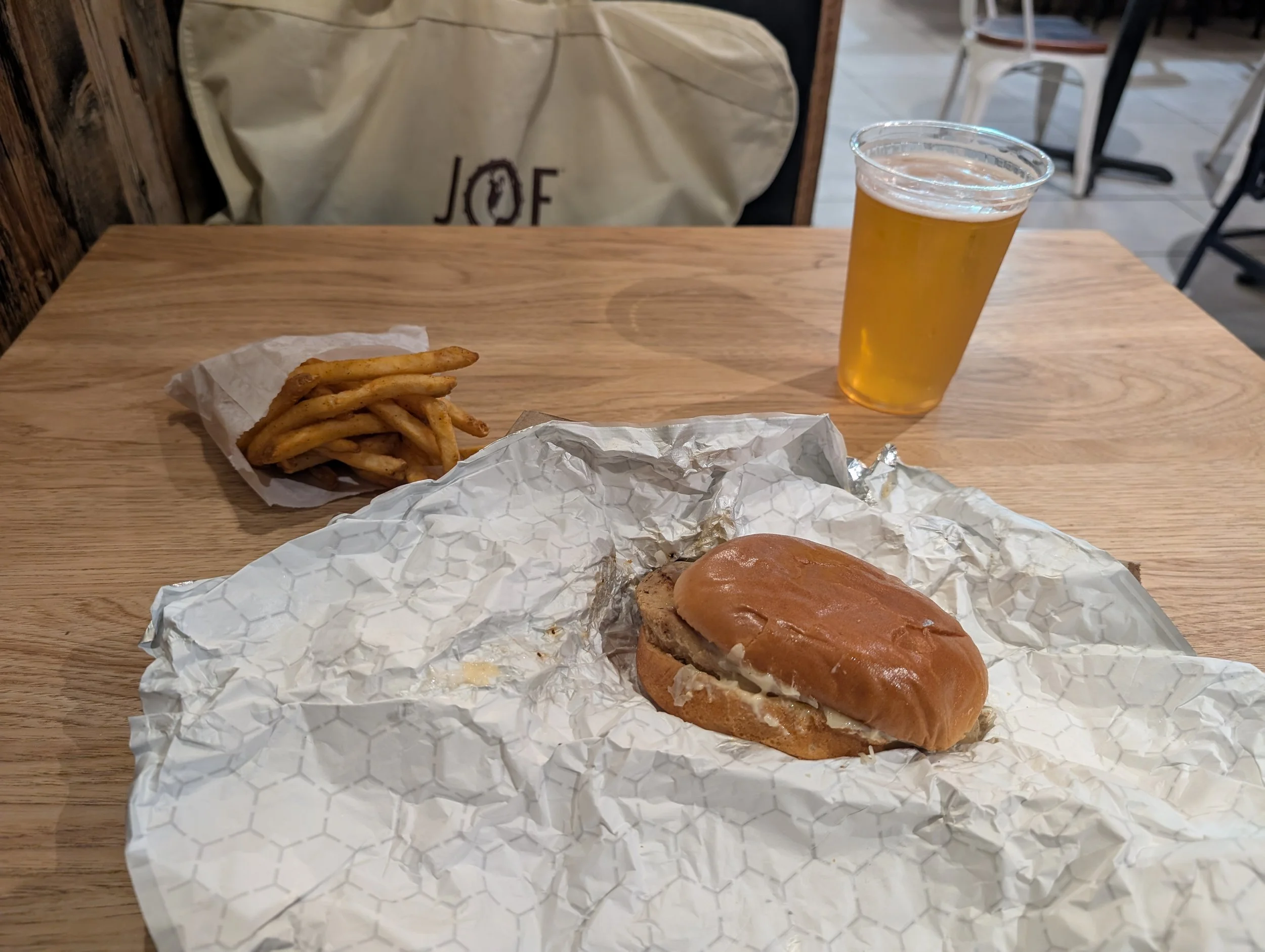
Portrait of a desperate meal.
Good ahead. Look at it. A chicken sandwich and some fries. (Beer is exempt from this scenario). Take a guess at how much this very simple meal set me back.
Got your guesses in? Placed your bet on poly-market or whatever? Good. It was $25.00. $25.00 for a frozen grilled chicken patty and some fresh (and very tasty) fries. Now, let me take a look at what that same chicken sandwich costs at the brick-and-mortar establishment located a–oh wait, it’s permanently closed.
Yet another dead restaurant roused from its grave to serve out an airport contract in the form of presenting what Austin is really like to those traveling to, through, or out of it. Luckily, the internet has provided a glimpse into what the “real” restaurant might charge for prices at an indeterminable date. According to this uploaded menu, the chicken sandwich I bought would have cost $8.46 and the fries…wouldn’t exist.
The last known location for Noble Sandwich company closed in September of 2019. I never had a chance to try the actual food and experience the vision of the people who worked hard to make it special, but for $25.00 I can be disappointed in an airport across from an empty, barren stage.
The Austin Airport is a graveyard, it turns out, for restaurants pretending to be alive while each one of them is stuck in a state of limbo, not being quite alive nor dead through the sheer force of will of an contract with a third party concessions company that has no bearings on what each place actually meant to the city of Austin at large.
De-boarding at the Final Destination
One of the draws of liminality and liminal spaces is the eeriness that one feels while exploring them. There is something uncanny about an abandoned space designed for people. A place designed for people sans people cannot help but feel haunted by the intent of the space - even when no one is on the playground, we feel those who must have played there, else why does the playground exist?

Play Pools today.
Where the internet comes in and invents liminal-inspired horror experiences is the crossover of that feeling and the idea that something not human designed the human-intended space. A nonhuman creator of a human space cannot know the reasons behind such designs, just the elements that are found in them - so stairs lead to nowhere, doors open to nothing, hallways echo into other hallways without terminal ends.
The same sentiment can be felt through the necromancy of restaurants existing long past their physical locations. The design wasn’t human; it’s only through the magic of corporate contract-making that these places even still exist, even if in name only. And that’s just plain eerie. These places shouldn’t exist; they no longer represent the city as they once did as the city has all but ensured that they can’t exist through an ever increasing need to develop high-income condos downtown.
And to add insult, where the liminal-feeling ends, they charge at least double the price for half or less of the quality at rates that would force the establishments they masquerade as to close.
This may just be a problem of the human-designed liminal space for human occupants. There’s too much bottomline and operational costs to factor in. I’ve never seen an overpriced chicken sandwich in The Backrooms. No one charges me an admittance fee for Pools. We thought all along that the true horror of these spaces was the thought of a non-human designer creating a trap for humans by mimicking the appearance of reality, but maybe the true horror is that these experiences are designed without profit in mind. And maybe the horrified are investors.
Or something.