The Speed of Cultural Commodification: The Horrors of This Year’s Macy's Thanksgiving Day Parade
I never really watched the Macy’s Thanksgiving Day Parade growing up. Being from New Orleans, watching a parade where you couldn’t catch beads or other awesome prizes just didn’t appeal to me on any sort of level. It was neat, certainly, when a balloon of a character of something I was interested in was featured and my family would be sure to tell me or point out to me that, “Hey, that one thing we know you like is in the parade this year!” And at first, that was exciting because I thought that there was something new in that franchise coming out soon and that’s why the balloon was present, to announce the new addition.
The presence of Snoopy should have told me otherwise.
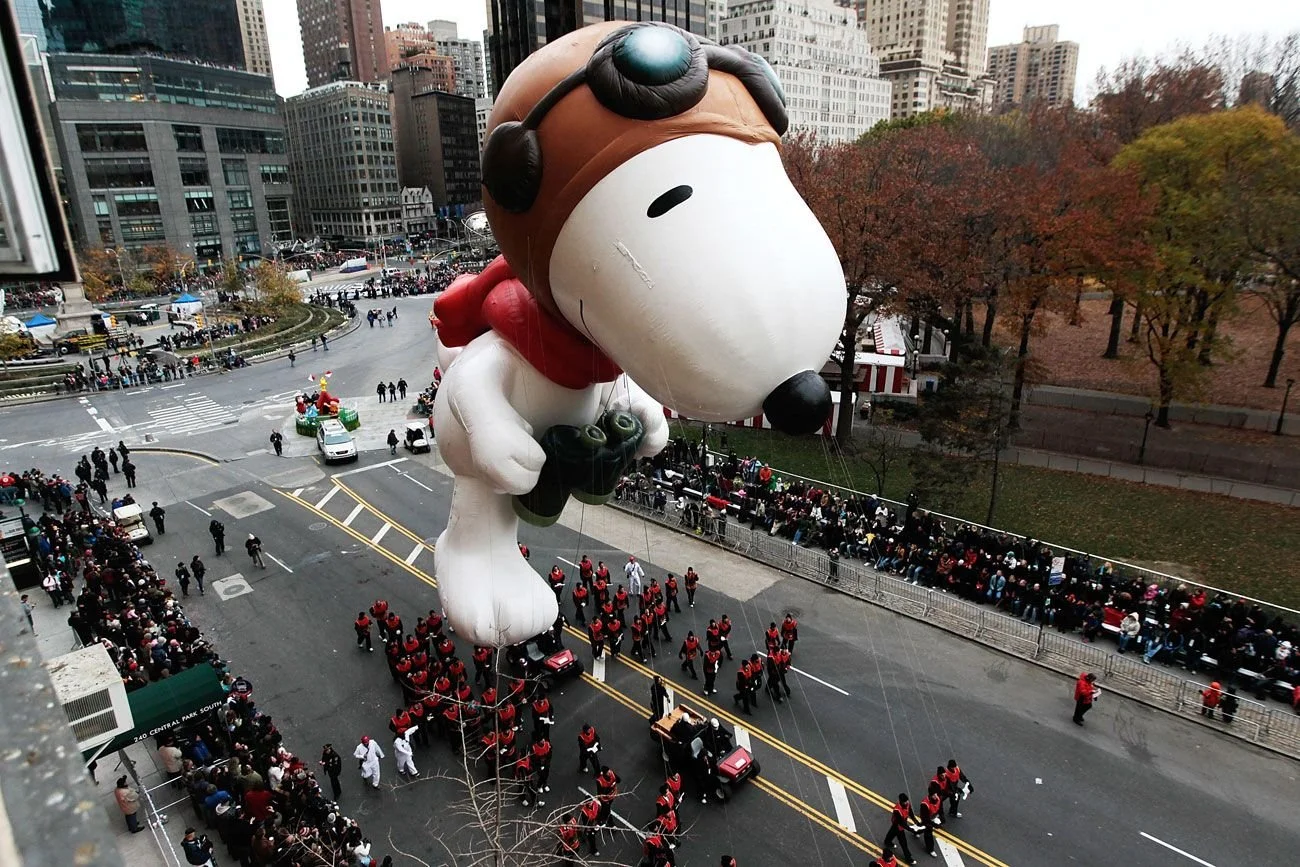
…What is he trying to see?
However, since marrying into a very Thanksgiving family, it has become somewhat of a time-honored tradition to watch the parade and comment on how we don’t know any of the music groups and catch a few Broadway show performances while the house of 25-30 people slowly wakes up to the smell of Thanksgiving dinner being prepared in the kitchen.
That sentence was too long. Point is, I have become reacquainted with this cultural touchpoint of mainstream interests and advertisements in recent years. For the most part, the parade is relatively harmless - a reminder of the franchises your child might be interested in as a slight nudge that there’s toys, games, merchandise that can be purchased as a Christmas gift this holiday season. Your child’s favorite cultural moments have fallen victim to commodification in the form of these balloons in this ancient symbol of the capitalization of culture.
But lurking under the surface of the sheer logistics of the parade is something more sinister, something that made me feel a sheer sense of dread. It’s something that is probably obvious to a lot of people, but as I’ve been mostly distracted lately with a newborn, it struck me as something akin to black magic. There was a Labubu float. And a K-Pop Demon Hunters balloon. And boy, oh boy, does it seem like everything is moving too fast these days.
A Case Study in Commodification
What do I mean by commodification? Well, I’m not using “commodity” to mean coffee or copper. To break it down a bit, a commodity is typically a raw material that can be bought, sold, or processed into a product. These are your base elements of commerce - those which can be transformed into profits by the act of selling.
A cultural commodity, then, is the process of turning art into merchandise, to put not too fine a point on it. We can observe, at times, the speed of which art is transformed into commodity, the rate at which expression morphs into sales and profits.

Not Pictured: A “George Clooney” Type
A fun example of this occurred not too recently in the wild west region of original streaming content. For the most part, there is not a lot of official merchandise tied to original streaming content for various reasons. For one, merchandising tends to be very expensive and requires way more logistics to reach a target audience than pushing the “Publish” button.
One such case that I insist should be studied is Disney’s bungling of the Baby Yoda launch via their original streaming show The Mandalorian. When The Mandalorian first launched in November of 2019, no one quite knew how the show was going to perform. Star Wars in general was in a bit of a tricky place with the new trilogy producing mixed reviews from critics and fans alike. Projects in the franchise were being green-lit and then quietly disappearing, but Disney+ needed new content and Jon Favereau had an idea for a show set in the Star Wars franchise and so here we were.
The reveal that the precious cargo that our titular Mandalorian was sent to retrieve was that of one baby Yoda, a name that had such cultural sticking power that it seemed like even with the official reveal of the name (it’s Grogu), would stick in our cultural consciousness (it didn’t, we all got on board with Grogu and that should be studied too). The curious bit that’s worth mentioning is that this bit of plot for this original streaming content show got to be 100% a shocking reveal to audiences. No one saw it coming (or if they did, it was not widely spread), and I can point to but one reason for that: the show had no relevant merchandise at launch.
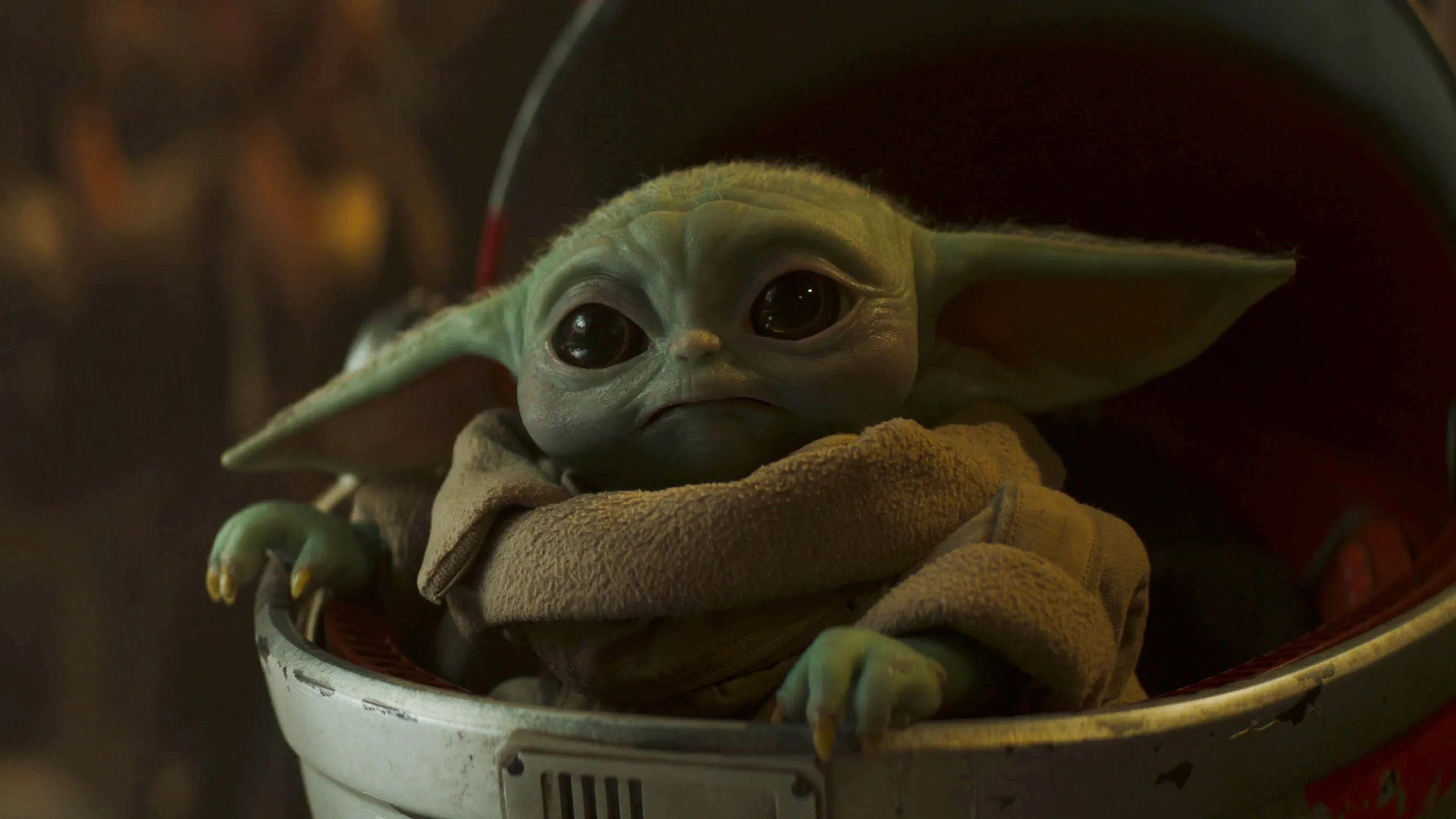
“No…merch?”
Normally, merchandise is released in anticipation of a movie or show to drum up hype in a younger audience. Frequently, toy-tie-ins to movies feature plot points or details that make sense once you’ve seen the film. Disney is one of the largest toy-tie-in manufacturers in the world with their branded line of special products related to their many, many franchises. Star Wars alone is very well known for its merchandising with the famous tidbit that George Lucas negotiated for the merchandising rights for the franchise and proceeded to make absolute bank through very savvy marketing and release after release of toys and merchandise.
All of which is to say, if Disney had anticipated what a hold that the reveal of Baby Grogu would have on our cultural consciousness, they would have 1000% had related merchandise available before, during, and after the initial release of The Mandalorian and the curious thing of it all is they 100% did not.
The fun part is, we then get to see how long it takes a company as big as Disney to get the merchandise wheels turning. We get to see in real time the rate at which art becomes a commodity - turning the reveal of Baby Yoda into buy-able products.
The Constant C - The Rate of Commodification
Baby Yoda was revealed in November of 2019, right before the holidays and some of the biggest pushes for toys, merchandise, etc., for all the good boys and girls. A quick surface-level google search reveals that one of the biggest questions of this time period was a simple, “Why no Baby Yoda?”
An article from Business Insider dives a little deeper to find that while you could preorder a Baby Yoda Funko Pop, the most base and entry level form of cultural commodification, they would not arrive until spring of the following year. This would put the rate of commodification at the most basic level at about 3 months or 1 quarter with a more robust offering following some time later. Not bad and leagues faster than the franchise’s original rate of commodification at 1 year.

The Height of Culture
Baby Yoda merch would go on to dominate the New York Toy fair in February 2020 with preorders available for various products set to launch later that year, with one such product, a life-sized figure of Baby Yoda, launching in the fall. More developed toys, more complicated than a Funk Pop or a plush, take more time, and Disney had kept this secret very much under wraps, so everyone was starting from scratch. So, our timetable is a little more obscure, but it can be averaged out that the rate of commodification is somewhere around 1 quarter for base level merchandise, and 2 quarters or half a year until we hit a saturation point.
3 to 6 months, I think, is a fair compromise. I’m not really out to land on hard numbers, anyway.
So our Constant C in this case is a not-so-constant 3 to 6 months and we can expect cultural hits that operate similarly to this Baby Yoda to fall along the same sort of path.
However! There is something MUCH MORE relevant to our rate of commodification and my experience this past Thanksgiving and that is the fact that Baby Yoda was not just commodified into merchandise and toys. No, Baby Yoda received one of the highest honors of a cultural commodity. This green young thing was turned into a balloon for the Macy's Thanksgiving Day Parade.
While we can reasonably say that it takes 3 to 6 months to reach a commodity saturation point as demonstrated by Baby Yoda, we do have hard, real numbers to nail down the rate at which a cultural commodity becomes inducted into the Hall of Fame via a spot as a balloon in the ever important parade. And in this case, it took over two years.
Grogu made their debut in the Macy’s Thanksgiving Day Parade in 2021. Two full years (and a couple days) after the first reveal in 2019.
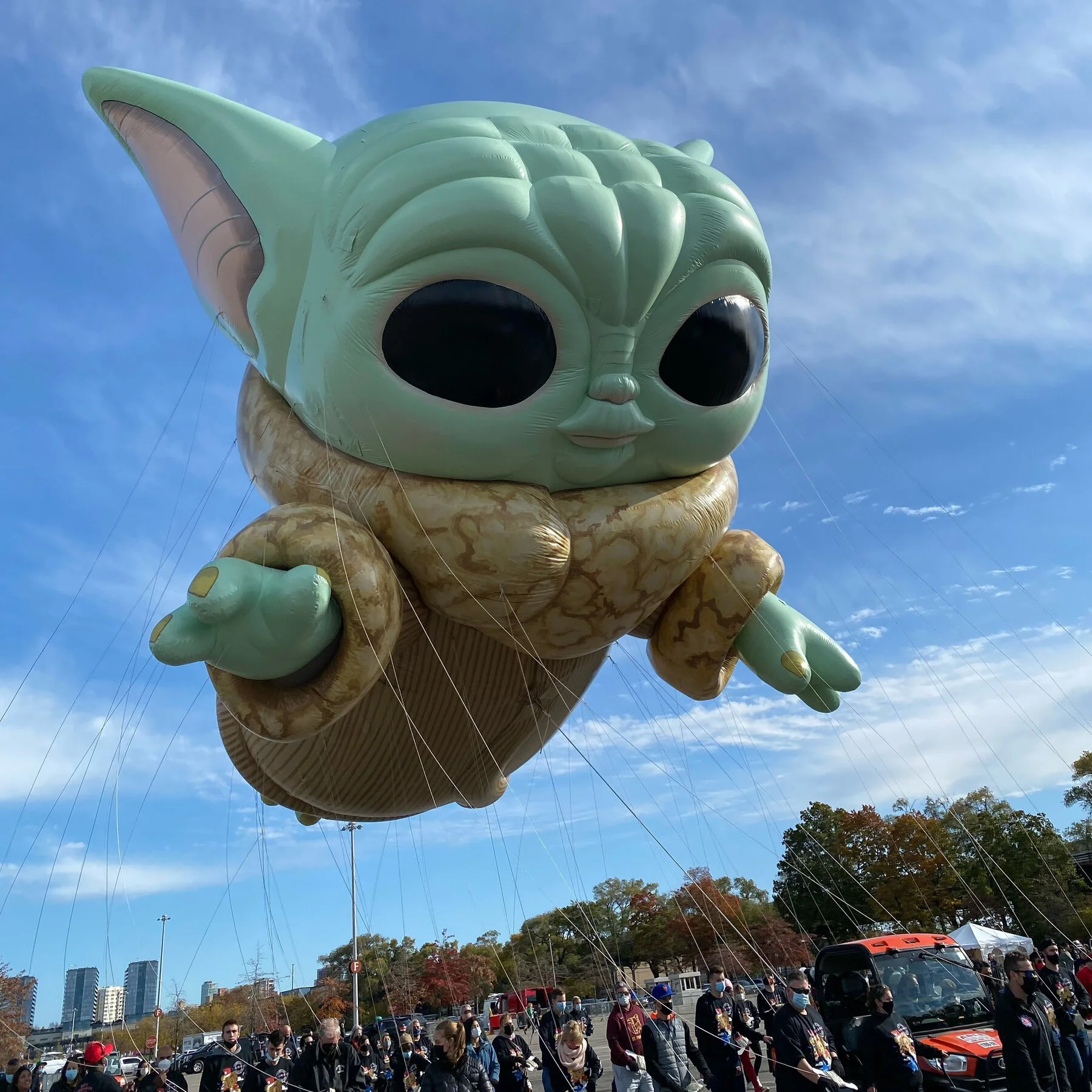
Next Stop: Walk of Fame Star
Typically, it takes a while to be inducted into this parade. Pokemon, a popular video game series that I literally cannot shut up about, made its MTDP debut in 2001, three years after the game’s and anime’s U.S. release in 1998. Similarly, Diary of a Wimpy Kid received a balloon three years after the book series’ debut in 2007. It took Dora, from Dora the Explorer, five years to receive a balloon after her series premiere in 2000.
Now, I do understand that the parade is first and foremost an advertising opportunity and not a celebration of brands and franchises that have “made it” in any sense, but I think it’s interesting to note that even in the case of some of the most popular characters and entries in their field, it takes a few years for them to appear in this venue.
Faster than the Speed of Commodification
Which is why it was so dang jarring to me to see not just a Labubu float but also a K-Pop Demon Hunters balloon featured in this year’s parade, since both of those cultural touch points debuted in this very year. It’s baffling to me. How. How are they moving so fast?
K-Pop Demon Hunters made its splashy, flashy, and catchy debut on Netflix in August of this year, a mere three months before their debut in the Thanksgiving Day Parade. Labubu’s on the other hand debuted just [checks notes] 10 years ago! Wait. 10 years ago? That…that can’t be right.
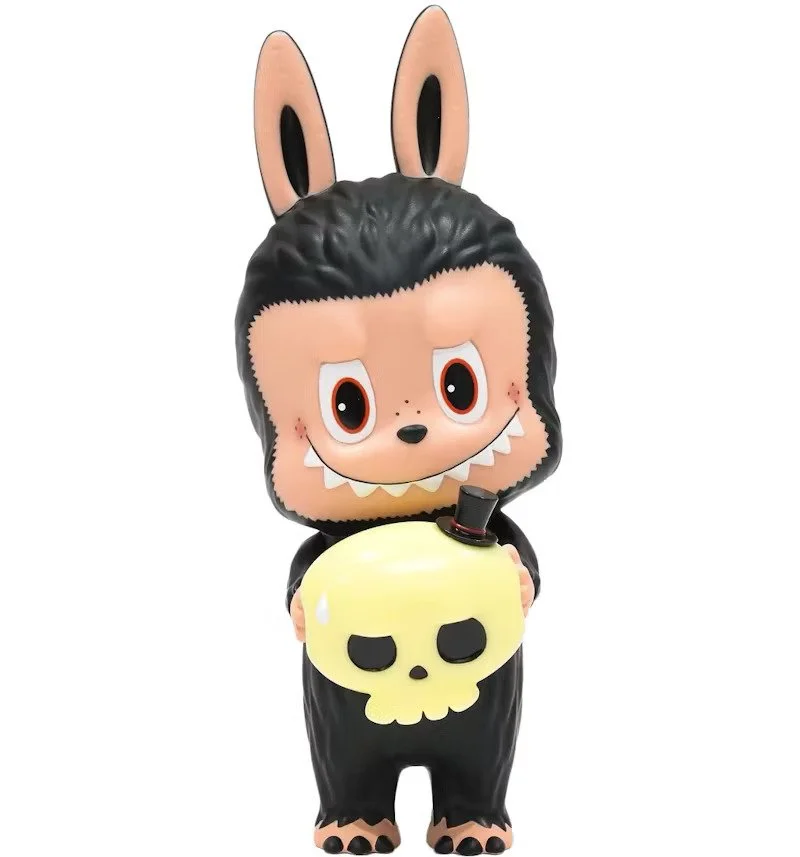
This Is Your God?
Oh. It is. Huh. Labubus were featured in Kasing Lung’s book The Monsters, debuting in 2015 and partnering with How2Work to produce figurines the same year. The toys would then go on to gain further recognition in 2019, when Pop Mart took over the figurine contract. So why are they so popular now? Okay. Well. I am keeping this part in even though it flies in the face of the point of my article to demonstrate that sometimes we learn things and our ears start bleeding and our eyes roll back into our skulls and Labubu’s have always been here and will always be here and we must give into the Labubu’s demands.
Ahem.
Let’s get back to the part that’s actually relevant. K-Pop Demon Hunters had a full on balloon in the Macy’s Thanksgiving Day Parade only three months after its debut on Netflix. Time to do some digging. In the case of Grogu, it took two full years for the little guy to show up; how was the blue tiger cat thing from K-Pop Demon Hunters able to be included so quickly?
When we do our research on the fly, we learn things fast: Did you know that the blue tiger’s name is Derpy Tiger? And there was actually another relevant balloon in the form of Sussie Magpie, which was apparently in front of Derpy Tiger, but on the ground.
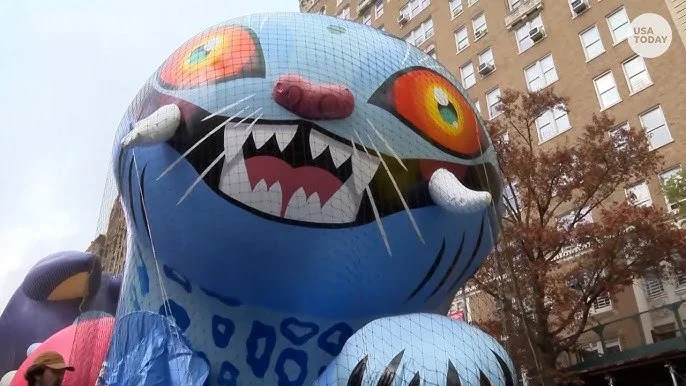
Yep. That’s One Derpy Tiger
There’s not many other details publicly available. The balloons were sponsored by Netflix and Sony Pictures, of course, and there was a tie-in performance by the singing vocal artists of the Huntrix group, which is to be expected, but there’s not much details about when the balloons were ordered.
By all accounts, K-Pop Demon Hunters was a surprise hit, so there’s little room to believe that Netflix and Sony Pictures would have had the foresight to order this balloon ahead of its debut in August. The film’s multiple theatrical runs, including sing-a-long versions and a Halloween flavored reprise, also suggest that this film’s success was not anticipated.
The only conclusion left, really, is that the commodification rate has increased exponentially. The speed for art debut to product commodification is growing closer to instantaneous. Soon, we’ll be pushed to buy during the experience and art will be rendered to mere advertisement.
To corroborate this, we can do a cursory glance at all of the K-Pop Demon Hunter merchandise available to purchase this holiday season, as no doubt, Netflix and Sony Pictures would be capitalizing on the franchise’s popularity with a toy line.
What’s that? There are no toys available to purchase? Well, okay. Toys take a while to produce, sure, but certainly there are shirts, accessories, and other such merchandising opportunities, right? Ah, yes, here’s the Netflix official gift guide for the 2025 holiday season. Certainly this will be chock full of availabl–what’s that? It’s mostly pre-orders beyond a couple of shirts at Hot Topic? One of the advertised items is the Spirit Halloween costume?
Huh.
Wait, but that would mea–
Henry Was Wrong and Everything’s Fine
Commodification isn’t rapidly speeding up to the point where art and commodification of said art is happening instantaneously. I was influenced by the presence of a balloon in a parade, which does seem rather quick. I suppose time will tell whether or not the K-Pop Demon Hunter balloons will stand the test of time. I don’t fault Netflix or Sony Pictures for trying to keep their property in the cultural consciousness long enough for their merchandise to come to fruition. It seems we are in another Baby Yoda situation. The Mandalorian had subsequent seasons to keep the interest going, so we’ll have to see if the announced sequel landing in 2029 can do the same for this franchise. Animation takes a long time.
I suppose this article is a good example of letting one’s feelings drive their conclusions. It felt as though two properties released mere months ago were on the verge of becoming current-day cultural cornerstones when in fact, one property has been around for a decade and the other is just getting started in terms of its cultural staying power. In a way, having a balloon in the parade will be a good yearly reminder of the upcoming sequel as well as being able to die in new merchandise launches that are taking upwards of a year to come to fruition anyway.
I never had a problem with the performance done during the parade by the singing vocal artists of the Huntrix group. If anything, I welcomed it because the songs are catchy and the movie is quite good and having something present-day relevant in this stuffy parade is a fresh breath of air considering I’ll probably not get the chance to see any of the Broadway shows who also had performances.
I set out to do a bit that the speed of commodification was nearing the speed of light (the constant C), and as a result, I’ve been thoroughly put into my place by a healthy dose of reality. I suppose I should be thankful for that.